HER2 heterogeneous breast cancer models reveal novel therapeutic targets and subclonal dynamics during evolution to resistance to HER2-targeted therapies
Cancer Discovery
Clonal evolution · Metastatic adaptation · Therapeutic resistance
The Goyette Laboratory studies how heterogeneous breast tumours evolve under metastatic and therapeutic pressure, how individual subclones adapt, and which molecular vulnerabilities remain targetable as disease progresses.
Research framework
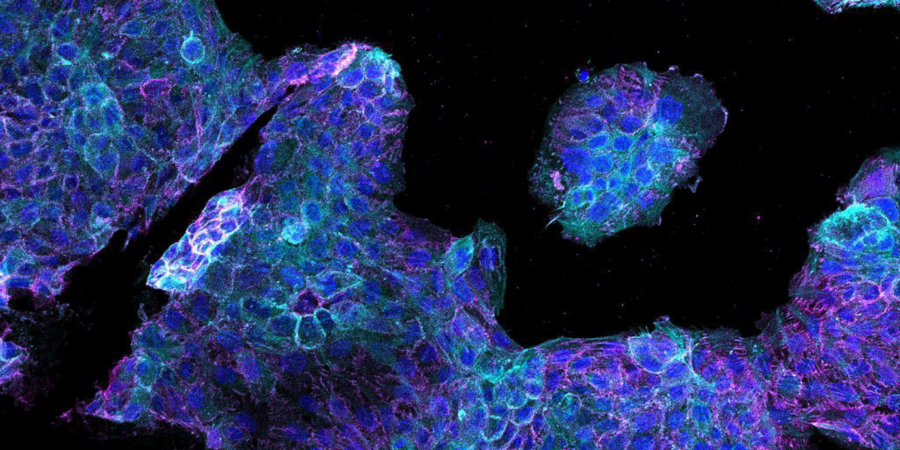
Breast tumours contain genetically and phenotypically distinct populations that do not respond uniformly to therapy. Some subclones survive treatment, interact with organ-specific stromal environments and acquire metastatic traits. The laboratory combines faithful heterogeneous tumour models with single-cell, proteomic and functional screens to reconstruct this evolution and identify vulnerabilities before resistant states become dominant.
Research programmes
We reconstruct how HER2-high and HER2-low subpopulations compete, cooperate and change during targeted therapy.
Open programme ↗02We investigate how stromal contact, glycoproteins and the cancer-cell glycocalyx shield HER2 signalling from targeted therapy.
Open programme ↗03We identify the programmes that enable dissemination, tissue entry and growth at distant metastatic sites.
Open programme ↗04We combine multi-omic profiling and functional screening to find dependencies shared by resistant subclones or created during adaptation.
Open programme ↗Metastatic evolution · principal investigatorPrincipal investigator
Selected work
Cancer Discovery
Cancer Cell
Proceedings of the National Academy of Sciences
Journal of Clinical Investigation
Join the laboratory